What the “95% of AI pilots fail” claim actually means
 Maroun Altekly8 min read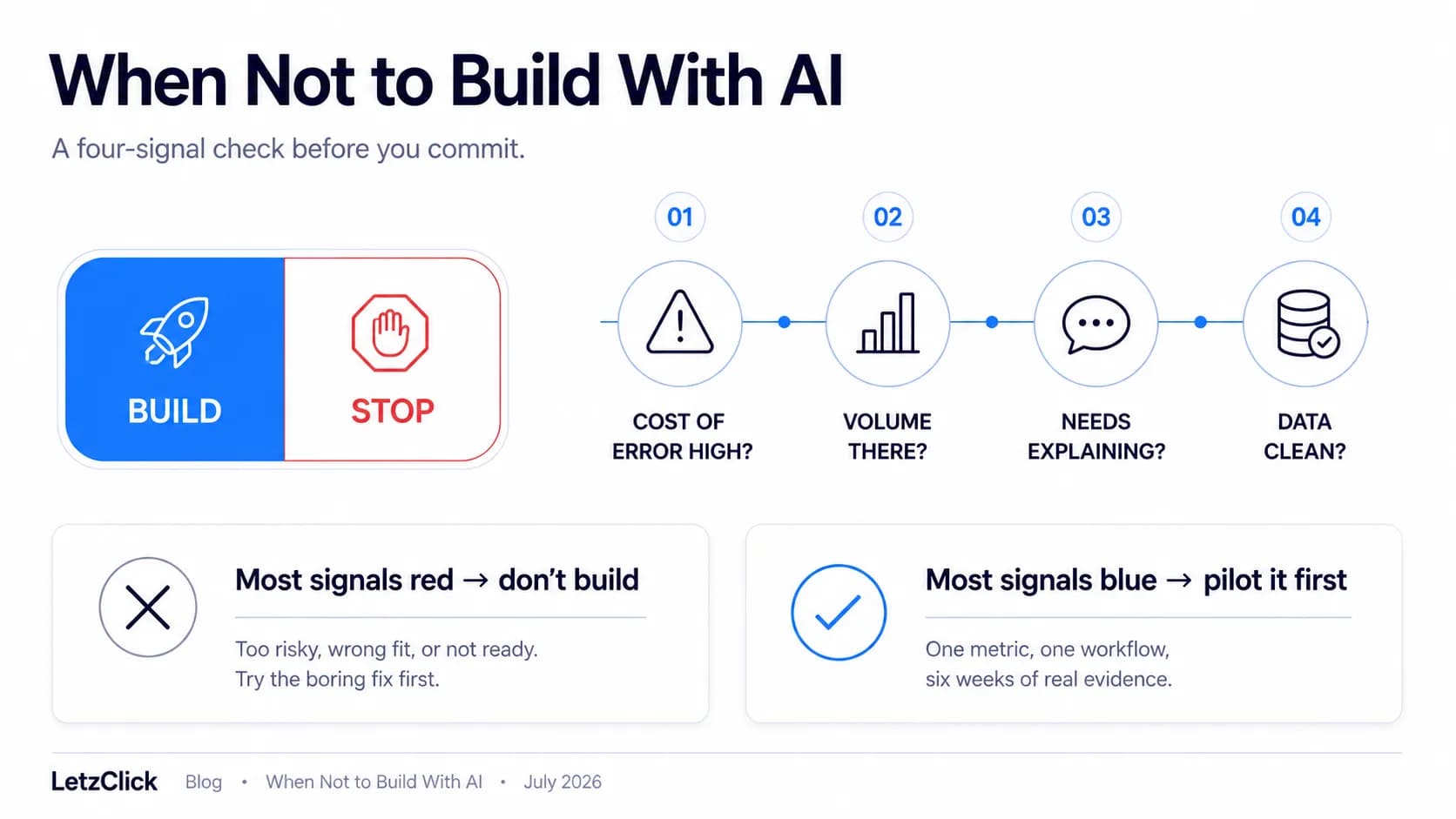
When not to build with AI is a decision every team should make before choosing a model or tool. The default assumption that every workflow should use AI gets expensive. AI is right for some problems and a costly distraction for others; the honest way to tell the difference is to test.
A model can do almost anything badly. Can AI do this is the wrong test, because the answer is nearly always yes, and yes is not useful. The question that earns its keep is narrower: should a model run this workflow, measured against one number we actually care about? A task with a near-zero tolerance for error, low volume, or data too messy to trust is usually a poor fit, however impressive the demo looked.
A few signals tend to appear before any code is written. None is a hard rule on its own, but together they tell you when not to build with AI.
The cost of being wrong is high. If a single mistake carries legal, safety, or financial weight, and a person still has to check every output line by line, the model may save no time at all. You have built an expensive draft generator.
The volume is not there. AI earns its keep on repetition. A task done twice a month rarely justifies a build, an integration, and the upkeep that follows. The maths has to work, not just the demo.
The decision needs explaining. Regulators, auditors, and customers often want to know why a call was made. A process that cannot show its reasoning turns a black-box model into a second, harder problem.
The data cannot be trusted. Models learn from examples. If the history is thin, inconsistent, or locked in formats no one can clean, the output inherits the mess. For a structured way to weigh these risks, the NIST AI Risk Management Framework is a useful reference.
It helps to know the positive signals too. AI tends to earn its place where a task repeats often enough to matter, where being right most of the time is genuinely useful (and being wrong is survivable), where the data is clean and abundant, and where the output can be checked quickly by the person who will use it. Support triage, lead scoring, summarisation for a human reviewer: these are the shapes AI handles well. Notice that none of them hands the final decision to the model.
Before building anything, check whether a simpler move does the job. A clear process change, a written rule, a spreadsheet formula, or a single integration between two tools often removes the friction entirely. These fixes are cheaper, faster to ship, and easier to explain to anyone who asks. They also teach you something useful: if a simple rule solves most of the problem, the remainder may not be worth a model. Most of our methodology starts upstream of AI for exactly this reason.
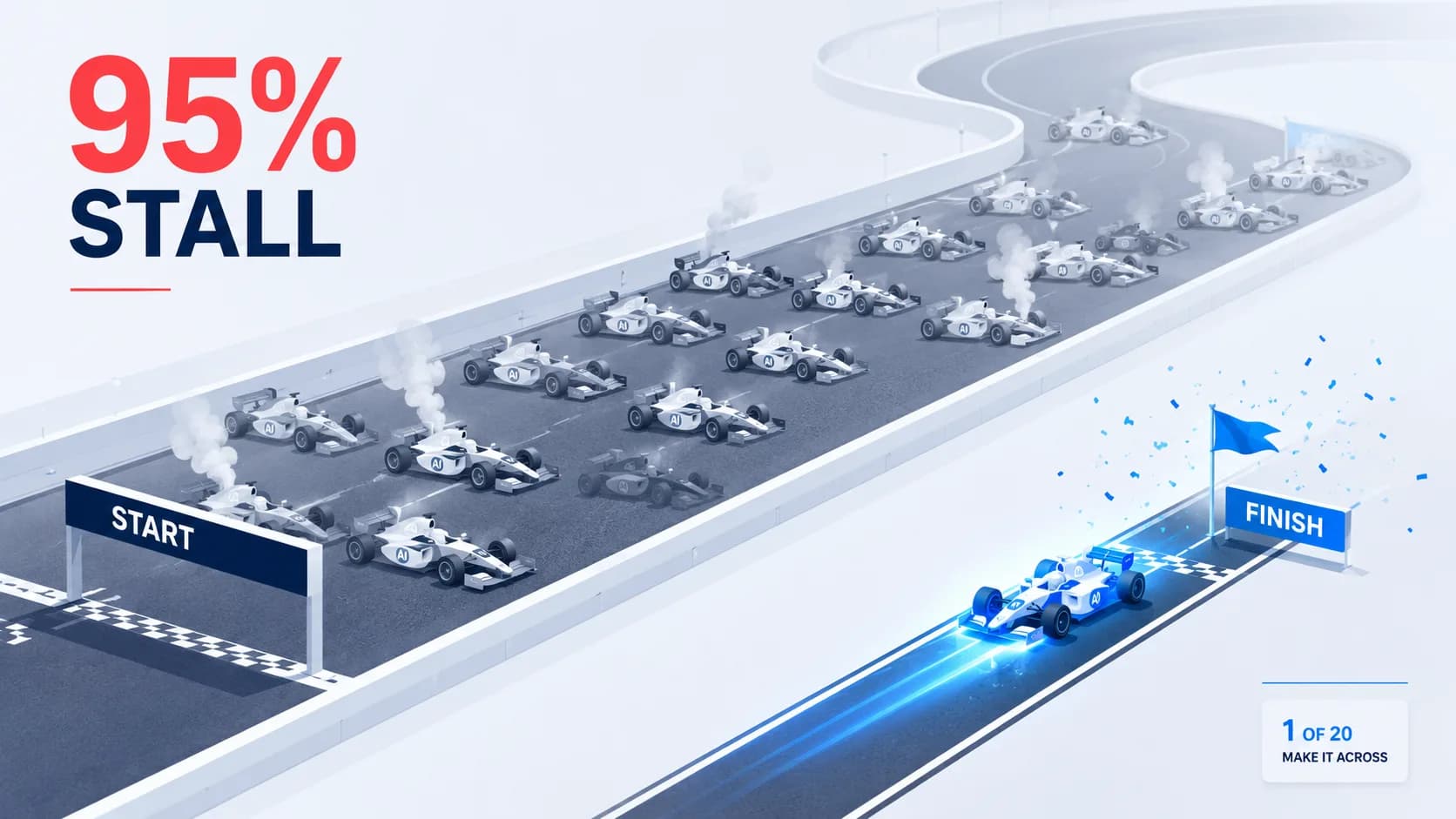
When a workflow survives those checks, the disciplined move is a short pilot. Pick the one workflow. Name one metric that would count as success, and measure the baseline before you build, so the comparison is real and not a feeling. Then build the smallest version that could move that number, on your real data, with the people who will actually use it. We have written separately about how to choose that one metric, and about why most pilots stall before they ever reach it.
Give the pilot permission to fail. Its job is to produce evidence, not to defend a decision someone has already made. If the metric does not move, or the output is not reliable enough to put in front of a customer, that is the answer.
The danger is not just a project that flops. It is the slow drag that follows. A model that is almost good enough gets patched, supervised, and worked around until nobody remembers what it was meant to do. Maintenance eats the team that built it. Trust erodes the first time the output is quietly wrong. And the budget that should have gone to a workflow that actually fit is gone. Forcing AI where it does not belong trades a small no now for a large cleanup later.
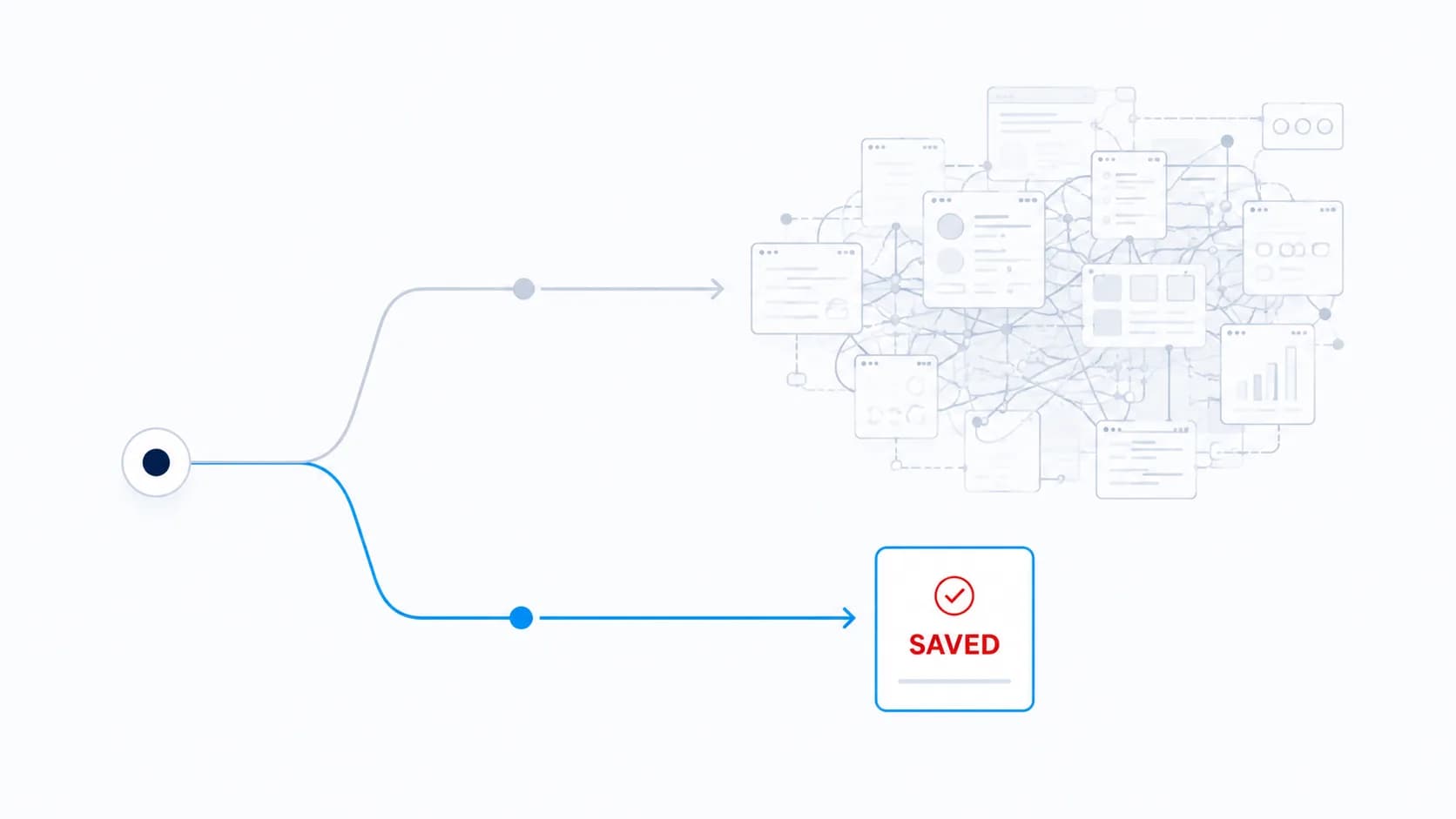
A pilot that ends in do not build this has done its job well. It has saved the budget you would have spent scaling something that does not work, the months of engineering time, and the credibility a failed rollout burns. It also gives you a defensible answer, backed by your own numbers, the next time someone asks why you are not doing AI for that workflow. In a room full of people who want to build, the person with evidence to stop is the one saving the company money.
Stopping early, with evidence, is a result. The point of the pilot was never to build. It was to decide.
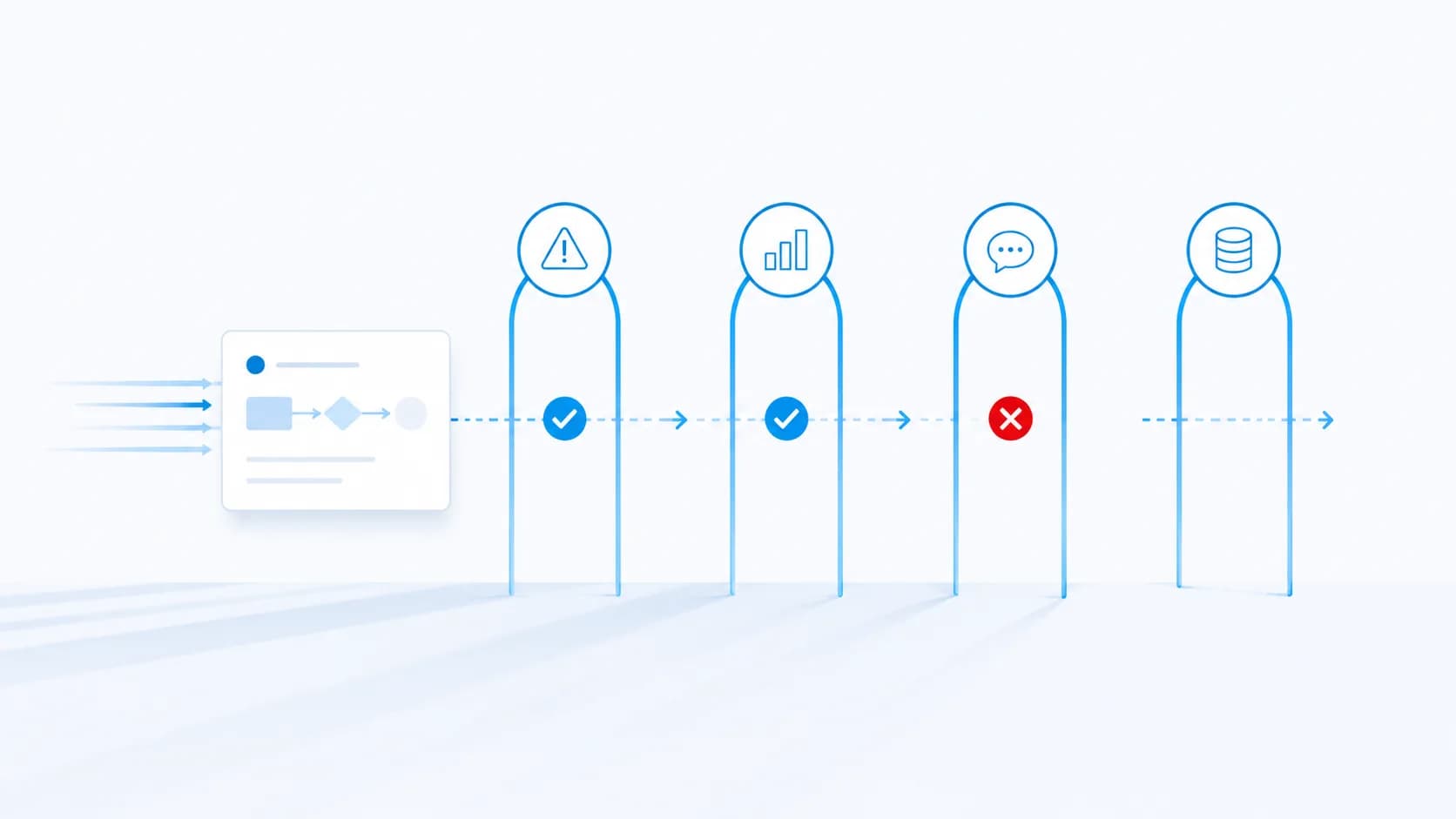
Before approving a build, run the workflow through four questions. Is the cost of being wrong high? Is the volume there? Does someone need to explain the decision? Is the data clean enough to trust? If most answers point away from AI, a short pilot will probably confirm it, cheaply. If they point toward it, the same pilot tells you whether it is worth scaling. If you want help running that test, the fastest route is a short conversation.
The teams that get AI right are not the ones that build the most. They are the ones that decide well, and that treat a clear not this one as judgement, not hesitation. If you are weighing whether a workflow deserves AI, the honest way to know is to test it properly.
Co-founder-led strategic consulting in AI and digital transformation for Luxembourg SMEs.